The Chaos Theory
How Duolingo killed its mascot, broke the internet, and reminded every brand in the world that entertainment is not a marketing tactic…it’s a business strategy
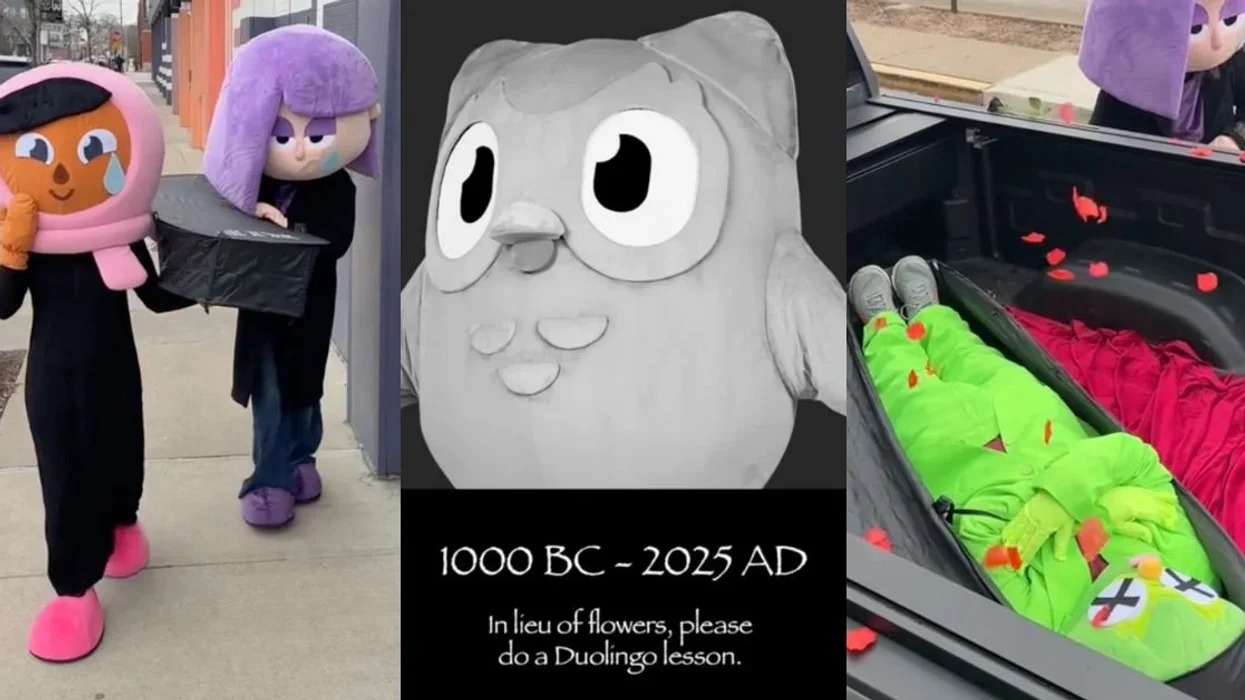
On February 11th 2025, Duolingo posted a statement announcing that Duo (the small green owl who had spent years guilt-tripping 500 million registered users into doing their Spanish homework) was dead.
Hit by a Cybertruck. Gone. Tongue out, eyes crossed, coffin ordered. The internet absolutely lost its mind.
The World Health Organisation posted condolences. The European Space Agency mourned. Dua Lipa (whom Duo had been publicly obsessed with since 2021) reshared the news. That single reshare generated 22 million views. The hashtag #RIPDuo was used more than 45,000 times. Social mentions spike 25,560% in a single day. In two weeks, the campaign generated 1.7 billion impressions. Organically.
To put that into perspective: there was twice as much social conversation about Duo’s death compared to every Super Bowl ad combined. The average Super Bowl spot costs around 13 million Australian dollars for 30 seconds. Dead Duo cost, by Duolingo’s own account, practically nothing.
AdAge named Duolingo Marketer of the Year.
And the business world largely responded the same way it always does when something genuinely creative works: with a mix of admiration and complete confusion about how to replicate it.
This is my attempt to explain what actually happened. Because the Dead Duo campaign wasn’t a stroke of luck or moment of madness. It was the inevitable result of a brand that had spent years making deliberate, very counterintuitive decisions.
Duolingo decided that the most powerful thing a brand could do in 2025 was make people feel something. Not buy something. Not download something. Feel something.
And everything else…the revenue, the users, the growth…followed from that.
First, let’s dive into the numbers, because they’re ridiculous
$748M USD: Revenue in 2024. A 41% increase year-on-year, crossing over $1 billion AUD. Wild.
46.6M: Daily active users in Q1. Up 49% YoY.
1.7 billion: Organic impressions from the Dead Duo campaign in two weeks, spent practically nothing.
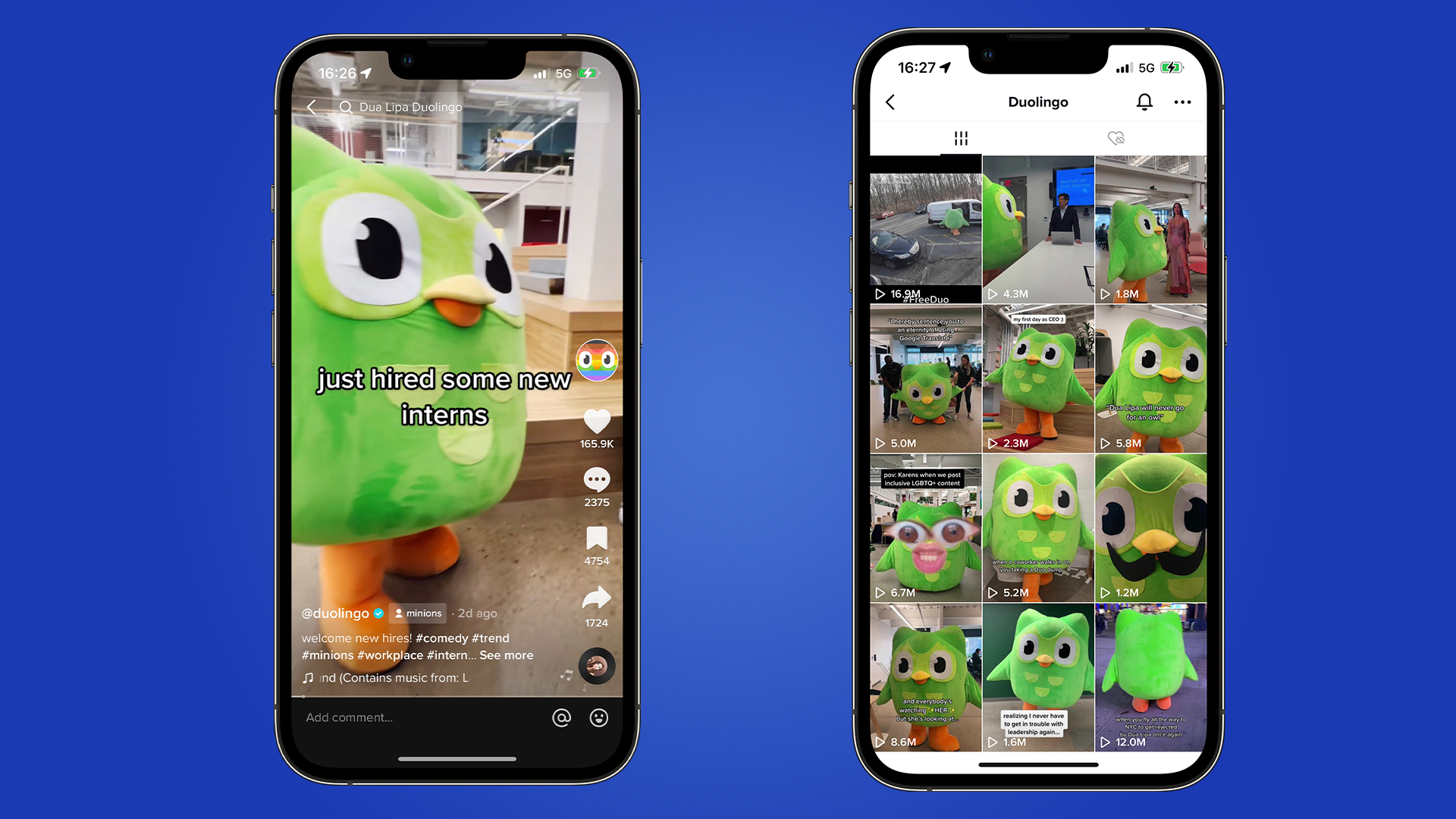
50,000 → 16.5M: TikTok followers grown by one person, Zaria Parvez, since 2021.
That last one deserves a moment. One person. Starting from 50,000 followers. In four years, to 16.5 million. No massive budget. No celebrity-fronted campaigns. No traditional advertising strategy.
Just an extremely clear understanding of what the platform rewarded, what their audience actually wanted, and the creative freedom to give it to them without 12 rounds of approvals (IYKYK). The revenue growth is remarkable, but the TikTok number is the real story.
The three decisions that made Duolingo impossible to ignore
Decision 01: Entertainment first. Product second.
Most brands treat social media as a distribution channel for product information. They post about features, promotions, testimonials, announcements. The content exists to serve the business.
Duolingo inverted this completely.
Their social strategy (particularly on TikTok) was built on a single brief: be the most entertaining account on TikTok, full stop. Not the most educational. Not the most informative. The most entertaining.
The owl threatened users. Argued with the legal team. Pined after Dua Lipa across multiple platforms over multiple years. Showed up at Berlin Fashion Week. Died and came back. The content almost had nothing to do with the language learning.
And that, was entirely the point.
Monica Earle, Duolingo’s Director of PR, said it plainly: “We don’t want to sell the product on social media through traditional marketing. We’re finding more natural ways to bring the app and social presence closer together.”
Entertainment creates attention. Attention creates familiarity. Familiarity creates downloads. Downloads create subscribers. Subscribers create revenue.
It’s a much longer chain than most brands are willing to commit to, but it compounds in a way that paid advertising simply can’t.
The Dead Duo campaign generated 1.7 billion impressions. At a conservative cost-per-impression benchmark, where that kind of reach through paid media would have cost tens of millions of dollars. Duolingo’s entire sales and marketing budget for 2024 was around 140 million Australian dollars, and that covered everything…not just one campaign.
The return on entertainment is nearly impossible to match through conventional means. The problem is it requires something most marketing budgets can’t purchase: genuine creative conviction.
The lesson: Stop asking what your content can do for your product. Start asking what your content can do for your audience. When you get that right, the product takes care of itself.
Decision 02: Build a character, not a mascot.
Duo the owl existed before Zaria Parvez joined Duolingo in 2021. He was a logo, a brand asset. A little green bird that showed up on notifications. What Parvez did was turn him into a person. Not a polished brand persona with carefully approved talking points and a consistent messaging framework, but an actual character. Ongoing storylines, running jokes, relationships, enemies, obsessions and emotional range. A character who evolved in real time based on what was happening in culture.
The Dua Lipa obsession started as a one-off joke and became a years-long narrative that the audience was genuinely invested in. When Dua Lipa eventually acknowledged Duo (and then mourned him when he died) it felt like a plot resolution. Because it was.
This is something almost no brand has the patience or the courage to do. Building a character takes years. It requires posting content that doesn’t directly serve a business objective (enjoy presenting that business case to the CEO). It requires trusting that the emotional connection being built will eventually convert into commercial value, even when you can’t draw a straight line between the two,
Parvez herself said her success came from “pitching risky ideas” and understanding that genuine audience connection required posting content she personally found funny, not content that had been optimised, approved and sanitised until the personality had been completely removed.
The Dead Duo campaign only worked because people genuinely cared about Duo. You can’t manufacture that in two weeks. It took four years of consistent character development to create an audience so emotionally invested in a cartoon owl that they’d collectively complete 50 billion XP points across 15 countries to bring him back to life.
That’s not a marketing metric. That’s a fan base. And fan bases are built through character, not campaigns.
The lesson: Your brand needs a point of view that people can have a relationship with. Not a style guide. A perspective. A personality. Something that exists and evolves beyond the product and gives people a reason to keep paying attention even when you’re not selling anything.
Decision 03: Trust the team, and move faster than the approval process
The Dead Duo campaign was originally planned as 3 x social posts.
When the first post went live and the engagement data showed something genuinely unprecedented was happening, the team made a decision in real time to build it into something much bigger. To create a whodunit narrative. To bring in other brands. To loop in the product team and change the app icon globally. To set up a website where users could earn XP to bring Duo back.
All of this happened within days, because Duolingo had built a structure where the people closest to the audience had the authority to act on what they were seeing without waiting for committee approval.
This is WAY harder than it sounds. Most organisations of Duolingo’s size have layer upon layer of sign-off processes. Legal review, brand review, executive approval, agency involvement. And by the time a cultural moment has been approved, it’s no longer a cultural moment.
CEO Luis Von Ahn’s brief to his team wasn’t a 47-page brand playbook. It was four words:
“Make it more weird.”
That level of creative trust, from a CEO who understood that genuine cultural relevance can’t be achieved through conservative decision-making, is what allowed Duolingo’s team to operate with the speed and instinct that viral moments require.
The lesson: The brands that show up in culture move faster than their approval process. If every piece of content requires three rounds of sign-off before it goes live, you’ll always be reacting to moments that have already passed.
Now, this is my take…because this isn’t just a fun story. Here’s what I think most brand commentary on Duolingo gets wrong.
People look at the Dead Duo campaign and see chaos. They see a brand being weird for the sake of being weird. They see a stunt that happened to go viral and file it under ‘things big brands can do that we can’t.’
That framing misses the entire point.
Duolingo’s social strategy is one of the most disciplined, intentional and strategically coherent approaches to brand building in the last decade. Every ‘chaotic’ post is a calculated investment in a long-term asset; being, an audience that genuinely cares about the brand. Not because they were targeted with the right ad, at the right time. Because they’ve been entertained, surprised and made to feel something over years of consistent, creative, human content.
The chaos is not the strategy. The chaos is the output of a very clear strategy: build a character your audience has a genuine relationship with, give that character a platform to exist and evolve, trust the people closest to the audience to make decisions fast enough to matter, and measure success not in immediate conversions but in the depth of attention being built over time.
That’s not chaos. That’s compounding.
The real lesson from Duolingo isn’t ‘be unhinged on TikTok.’ It’s: build something your audience genuinely cares about and then trust the people who understand the audience to show up for them every day.
What this means for your brand
You likely don’t have a mascot to kill. You probably don’t have a TikTok team. And you definitely don’t have Dua Lipa’s personal phone number. But the principles underneath the Duolingo story apply at every scale.
01. Entertainment is a legitimate business strategy, not a distraction from one
The instinct in most businesses is to make every piece of content earn its place through a direct commercial outcome. Clicks, enquiries, conversions. But content that entertains, surprises, or genuinely connects, builds something that ‘convert content’ can’t. Trust at scale. Ask yourself: is any of your content actually enjoyable to consume? Not just useful. Enjoyable. If not, you’re leaving the most powerful tool in the room on the bench.
02. Build a POV that your audience can have a relationship with
Duo worked because he was a character with opinions, obsessions and emotional stakes. Your brand needs the same. Not a set of values written on a website. A genuine, consistent, specific point of view that exists across everything you create. This will then evolve over time as your audience gets to know you. Every edition proves the thesis, and over time that compounds into something no viral post can manufacture.
03. Give the people closest to your audience the authority to move fast
The Dead Duo campaign became what it was because one person (Zaria Parvez) had the creative freedom and organisational trust to build a narrative in real time as the data showed it was working. Most businesses have people who understand their audience deeply but have to fight through approval layers to do anything about it. That gap between instinct and execution is where cultural moments go to die. If you’re the founder, the question is: have you given your team the trust to act on what they’re seeing? If you are the team, have you given yourself permission to pitch the ‘weird’ idea?
04. Measure depth of attention, not just breadth of reach
The 50 billion XP completed across 15 countries to bring Duo back wasn’t a vanity metric. It was proof of an audience so invested in the brand that they’d change their actual behaviour (spending real time in the app) to participate in a story. What would your audience do to participate in your brand’s story? If the answer is nothing beyond passively consuming content, the question worth asking is whether you’ve given them anything genuinely worth caring about…
05. Consistency of character beats consistency of posting
Duolingo didn’t build 16.5 million TikTok followers by posting every day. They built them by posting with a consistent, recognisable, specific character that got sharper, funnier and more invested over time. Your posting frequency matters far less than your creative consistency. Show up with the same point of view, the same voice, the same underlying story, and let that compound. The right audience will find it.
My final words
Duo the owl isn’t dead. He came back, of course. Two weeks after his very dramatic departure he stepped out of his own coffin with the caption ‘Legends never die.’ Iconic.
The website built to resurrect him had surpassed its 50 billion XP goal. The story had a resolution. The audience felt rewarded for their participation. And the brand came out of the whole thing with more attention, more users and more cultural relevance than when it went in. The business result from a campaign that cost practically nothing.
But here’s what I keep coming back to. The Dead Duo campaign isn’t the story. It’s the proof of the story. The proof of four years of patient, creative, deeply human brand building that created an audience invested enough to care when something happened to a cartoon bird.
Most brands want the Dead Duo result without doing the four years of work that made it possible. It doesn’t work that way, never does.
The brands that earn moments like this aren’t the ones with the biggest budgets, the most followers, or the best timing. They’re the ones that showed up consistently, with genuine creative conviction, for long enough that their audience started showing up for them.
The question isn’t ‘how do we create a viral moment?’ It’s ‘have we built something our audience cares enough about that they’d show up for us if we needed them to?’
That answer takes years to earn. Start earning it today.